
The 2025 Hyundai Crater Concept: Forging a New Path in the Rugged SUV Frontier
The automotive landscape of 2025 is a crucible of innovation, where established titans and ambitious challengers vie for supremacy in every segment. Yet, few battlegrounds are as fiercely contested as the rugged SUV arena. For years, the Ford Bronco, Jeep Wrangler, and more recently, electric trailblazers like the Rivian R1S, have dominated the public imagination and the dirt trails. But a seismic shift is underway, heralded by a concept that could redefine what an adventure vehicle truly means: the 2025 Hyundai Crater. This isn’t merely a design exercise; it’s a declaration of intent, a bold statement from a manufacturer increasingly confident in its ability to not just compete, but to lead. As a veteran navigating this industry for a decade, I’ve seen concepts come and go, but the Crater carries a weight of genuine production promise and a strategic vision that demands attention.
Hyundai’s evolution into a serious contender in the rugged space hasn’t happened overnight. It’s been a methodical, calculated ascent, spearheaded by their XRT sub-brand. What began as an aesthetic trim package – think blacked-out accents and slightly more aggressive tires – has matured into a clear commitment to genuine off-road capability and adventure-ready engineering. In 2025, XRT represents more than just a badge; it signifies a philosophy. Inside Hyundai’s Southern California design center, the dedicated XRT workshop speaks volumes. Walls adorned with extreme sports gear, rock-climbing handholds, and an impressive array of all-terrain tires, ranging from 28 to a colossal 44 inches, aren’t just decorative. They are constant inspirations, daily reminders for designers and engineers focused on pushing the boundaries of what a Hyundai can do. The Crater is the most extreme manifestation of this vision to date, a clear signal that Hyundai intends to equip its XRT models with the hardware to match their adventurous spirit.
The Art of Steel: Sculpting Future Ruggedness
At the heart of the Crater’s compelling presence is Hyundai’s nascent “Art of Steel” design language. This isn’t just about sharp angles or muscular curves; it’s a celebration of dramatic bodywork achieved through pushing stamping presses to their absolute limits. The result is a vehicle that looks as if it were forged from a single, resilient block of metal, exuding an almost architectural strength. Deep draws create dynamic shadows and highlights, emphasizing both hardness and intricate detail. For the Crater, this approach translates into an aggressive, almost extraterrestrial aesthetic – think a lunar landing vehicle, purpose-built for navigating the most challenging terrains, be they alien craters or untamed earthly wilderness.
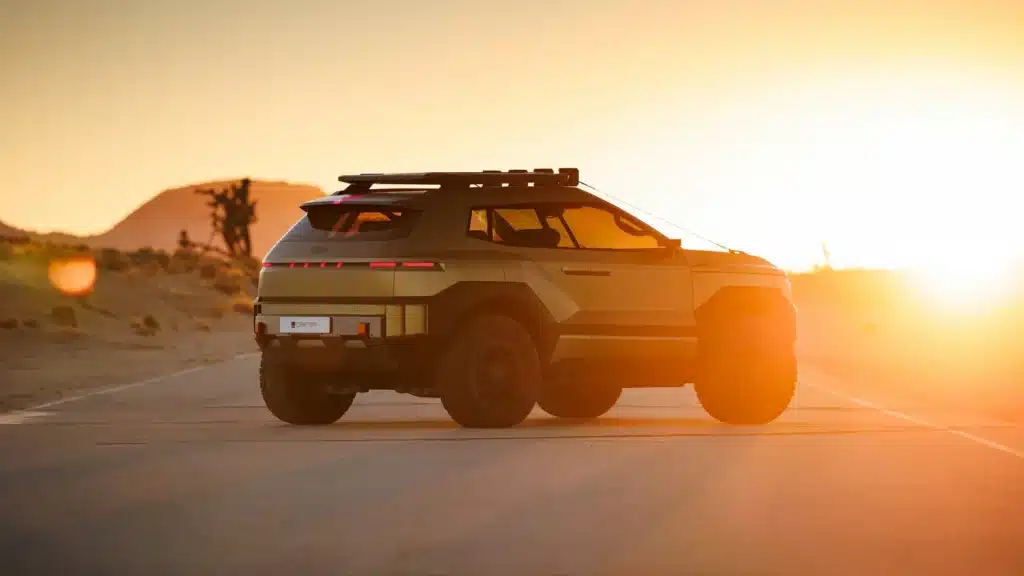
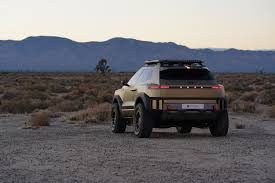
The Crater’s exterior design is a masterclass in controlled aggression. It’s practically all edges, a striking evolution of the parametric pixel design language seen on models like the Ioniq 5. Here, the pixel motif transcends mere taillights and headlights, integrating into auxiliary roof lights and even the detachable side mirror camera pods, which, in a delightful conceptual touch, double as powerful flashlights. The familiar black camo cladding, a signature element of the Ioniq 5 XRT, makes a prominent return, solidifying its place as a recognizable identifier for XRT EVs in the Hyundai lineup. This visual consistency across the emerging XRT electric vehicle range reinforces brand identity while clearly communicating the rugged intent.
Despite its imposing presence, especially when viewed tapering upward from its gargantuan 35-inch tires to its integrated roof platform, the Crater is surprisingly compact. Hyundai defines it as being roughly the same length as an Ioniq 5, a testament to clever packaging and visual deception. The long wheelbase, typical of many EVs, contributes to this perception of size, but it also translates to a stable platform, crucial for off-road prowess. The name “Crater” itself is brilliantly chosen, not merely hinting at its potential sales impact, but evoking the idea that something seemingly small can carve out a significant impression, much like a meteor striking the earth. This compact footprint with robust capability could position it uniquely against larger competitors.
Unearthing Easter Eggs: The Spirit of Adventure
Beyond the technical marvels and design rhetoric, the Crater concept embraces a playful spirit, evidenced by clever Easter eggs that reveal Hyundai’s deeper understanding of adventure culture. A close inspection of the driver-side orange-anodized front recovery point unveils the intricately machined face of “Crater Man.” This skull-like emblem, with its jagged teeth, is more than just a graphic; it’s a functional bottle opener, a subtle nod to camaraderie around a campfire after a day on the trails. It’s these kinds of thoughtful, user-centric details that differentiate a truly engaging concept from a mere styling exercise, demonstrating a human connection to the rugged experience.
Inside the Crater: A Return to Tactile Control and Digital Versatility
The Crater’s interior, conceived by Hyundai’s Korean design team, strikes a fascinating contrast to its angular exterior while maintaining a cohesive aesthetic. Where the exterior is sharp and dramatic, the cabin offers soft, rounded surfaces in its seats, armrests, and tubular dashboard elements, suggesting comfort amidst the chaos of off-road adventures. A burly, exposed roll cage not only adds structural integrity and safety but also integrates practical overhead grab handles, emphasizing its purpose-built design for challenging environments.
In a market saturated with ever-larger central touchscreens, the Crater bravely steers in a refreshingly analog direction. This isn’t a rejection of technology, but a re-prioritization of driver focus and tactile engagement. Instead of a single monolithic display, the Crater features four small, detachable panels. These units manage vehicle settings and even include built-in games for downtime, embodying Hyundai’s “bring-your-own-device” philosophy. The dashboard is designed to accommodate a smartphone or tablet via magnets, allowing drivers to utilize their preferred navigation and entertainment interfaces. This approach offers unparalleled customization and mitigates the rapid obsolescence of integrated infotainment systems.
Lest one mistake “analog” for “low-tech,” the Crater integrates cutting-edge features like a vivid head-up display that spans the entire width of the lower windshield, providing critical driving information without diverting the driver’s gaze. A pixel board on the steering wheel can dynamically flash different messages, adding a layer of communication or personalization. Crucially, powertrain functions such as the advanced all-wheel-drive system and locking differentials are managed by gear-like toggles on the dashboard and steering wheel, encouraging muscle memory and allowing drivers to keep their eyes on the challenging terrain ahead. Below these, a dedicated panel of physical buttons for climate control further reinforces this driver-centric, tactile interface, a design choice that many experienced off-roaders will undoubtedly appreciate in 2025.
Powering the Ascent: Strategic Flexibility in a Dynamic 2025 Market
The question of what truly propels a production-ready Crater is perhaps its most intriguing and strategically ambiguous aspect. While the concept currently operates (slowly) on electric motors, Hyundai remains deliberately non-committal about the ultimate powertrain configuration. This uncertainty, far from being a weakness, reflects a shrewd strategic flexibility in the volatile 2025 automotive market.
By 2025, the industry has seen both the rapid acceleration of EV adoption and a more nuanced understanding of the challenges, particularly for long-range, heavy-duty applications like extreme off-roading. Battery technology has advanced, offering better energy density and faster charging, but the infrastructure for truly remote adventure remains nascent. Thus, Hyundai’s non-confirmation hints at a modular platform capable of accommodating various powertrains.
Electric Power (EV): A powerful, torque-rich electric drivetrain remains a highly compelling option for an off-road vehicle. Instant torque, zero emissions, and a potentially spacious “frunk” (front trunk) in the absence of a combustion engine are significant advantages. Imagine advanced battery thermal management systems ensuring optimal performance in extreme temperatures and fast-charging capabilities that align with emerging 2025 standards. The Crater could leverage next-generation electric motors offering unprecedented wheel-by-wheel control and articulation for navigating complex obstacles, a major competitive advantage over traditional mechanical systems.
Advanced Hybrid (PHEV/HEV): This could be the sweet spot for many adventure enthusiasts in 2025. A plug-in hybrid system (PHEV) would offer significant electric-only range for daily driving and light trail use, while a highly efficient, perhaps even synthetic-fuel-compatible, combustion engine acts as a range extender or primary power source for extended off-grid expeditions. This hybrid approach addresses “range anxiety” – a common concern for EV off-roaders – and provides critical flexibility where charging infrastructure is non-existent.
Highly Efficient ICE with Performance Boosts: While less likely to be the primary focus, Hyundai might also explore a highly optimized internal combustion engine (ICE) option, possibly boosted by mild-hybrid systems, for specific markets or price points. The artificial engine sounds the concept makes, reminiscent of Hyundai’s N performance division, could be a playful misdirection or a subtle hint that a thrilling combustion experience, perhaps with a focus on sustainable fuels, isn’t entirely off the table for an XRT variant.
This strategic ambiguity allows Hyundai to pivot rapidly based on evolving market demands, regulatory shifts, and technological breakthroughs. It’s a calculated risk that ensures the Crater, in whatever form it reaches production, will be highly relevant and competitive in 2025 and beyond.
The Challenger: Taking on the Established Off-Road Guard
The Crater isn’t just a rugged concept; it’s a direct challenge to the established order. In 2025, the market for robust, adventure-ready SUVs is segmenting rapidly, and the Crater seems poised to carve out a unique niche by blending futuristic design, innovative technology, and serious capability.
Jeep Wrangler & Ford Bronco: These are the heritage giants, revered for their legendary off-road prowess, vast aftermarket support, and iconic design. The Crater offers a stark contrast: a fresh, futuristic aesthetic that signals a new era of adventure. While the Bronco and Wrangler command immense loyalty, the Crater could appeal to a younger, tech-savvy demographic seeking something distinct, perhaps with a more sophisticated on-road demeanor combined with comparable off-road chops. Its potential hybrid or EV powertrain could also offer a significant advantage in fuel efficiency and torque delivery over their largely ICE offerings, aligning with growing environmental consciousness in 2025.
Rivian R1S: As a fully electric, high-performance adventure vehicle, the Rivian R1S is a natural comparison. However, the Crater appears to target a more compact footprint, potentially allowing for greater maneuverability on tighter trails and urban environments. Hyundai’s established global manufacturing footprint and extensive dealer network could also give the Crater a significant edge in terms of accessibility, serviceability, and potentially a more competitive price point compared to the boutique nature of Rivian. The Crater’s interior philosophy, emphasizing physical controls and a ‘bring-your-own-device’ approach, also contrasts with Rivian’s minimalist, large-screen interface, appealing to different user preferences.
Hyundai’s strategy with the Crater seems to be about offering a highly versatile, all-around adventure vehicle rather than specializing in extreme rock crawling or high-speed desert running alone. It’s designed for the overland enthusiast who might tackle a challenging trail on Saturday, commute to work in comfort on Monday, and then embark on a remote camping trip the following weekend. This broad appeal, combined with Hyundai’s reputation for value and robust engineering, positions the Crater as a formidable dark horse in the 2025 rugged SUV race.
The Hyundai Trajectory: Concepts to Reality
Hyundai has, over the past decade, developed an impressive track record for transforming bold concepts into production realities with surprising fidelity. Think of the stunning Vision T concept evolving into the production Tucson, or the Prophecy concept morphing into the sleek Ioniq 6. They don’t just showcase futuristic ideas; they use concepts as serious indicators of upcoming design language and technological direction. While a production Crater would inevitably see some rationalization and toning down for mass manufacturing, the core aesthetic, innovative interior features, and rugged spirit are highly likely to endure.
Imagine piloting this machine through a winding mountain pass, the panoramic HUD feeding you real-time trail data, while the tactile switches allow instant engagement of locking differentials. Then, envision cruising back into the city, the sophisticated suspension smoothing out urban imperfections. The Crater represents a compelling blend of rugged capability and modern sophistication, a vehicle that doesn’t compromise on either.
The 2025 Hyundai Crater concept is more than just a glimpse into a potential future vehicle; it’s a confident declaration of Hyundai’s ambition to lead the next generation of adventure vehicles. It embodies a holistic approach to ruggedness, fusing cutting-edge design, thoughtful ergonomics, and strategic powertrain flexibility. This is Hyundai telling the world that they are ready to redefine what “XRT extreme” truly means, and in doing so, challenging the very foundations of the rugged SUV market. The Crater is a clear sign that the future of adventure driving will be as exciting as it is diverse.
What are your thoughts on this bold new direction for Hyundai? Do you believe the Crater has what it takes to disrupt the established off-road hierarchy? Share your insights and join the conversation about the future of rugged mobility.