
The Return of a Legend: Unpacking the Future Toyota Celica Sport
The automotive landscape of 2026 is a fascinating dichotomy of extremes. On one hand, the relentless march of electrification continues to reshape the industry, with battery-electric vehicles (BEVs) dominating headlines and product launches. On the other, a powerful counter-current is gaining momentum—a resurgence of analog driving thrills, fueled by a deep nostalgia for the golden age of sports cars. It is within this dynamic tension that the much-anticipated return of the Toyota Celica is poised to make its mark.
Whispers that began to coalesce into concrete plans in late 2024 have now evolved into a clearer picture, thanks to recent insights from Toyota’s own leadership. As the fifth-generation Toyota Supra approaches the end of its production run later this year, the question of what would fill the void in Toyota’s performance lineup loomed large. The answer, it seems, is not a simple one-to-one replacement, but a reinvigoration of a nameplate that carries a rich legacy of rally prowess and accessible performance: the Toyota Celica Sport.
For long-time automotive enthusiasts, the name “Celica” conjures images of rally stages, affordable excitement, and a versatility that appealed to a broad spectrum of drivers. While the Supra has always occupied the upper echelons of Toyota’s sports car hierarchy, the Celica represented the accessible entry point, a car that brought the joy of driving to a wider audience. Now, as Toyota Gazoo Racing (GR) solidifies its identity as the high-performance arm of the brand, the Celica is being reimagined through the lens of modern performance engineering, with a clear nod to its storied past.
The confirmation of the Celica’s return comes with the tantalizing detail that it will feature an all-wheel-drive (AWD) system. This is a significant departure from the front-wheel-drive configurations that defined the majority of the Celica’s production history, but it is far from unprecedented. The nameplate’s history is deeply intertwined with rally racing, and it was the all-wheel-drive All-Trac Turbo variants of the fourth generation that cemented the Celica’s reputation as a formidable force on the world stage. The prospect of a modern, AWD-equipped Celica immediately draws parallels to the legendary rally cars that once dominated the World Rally Championship (WRC).
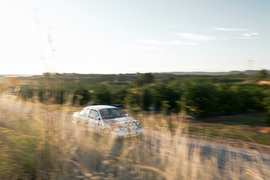
Indeed, the rally connection appears to be more than just a historical nod. Recent sightings of a camouflaged Toyota rally prototype undergoing testing in Portugal in February 2026 have fueled speculation that the next-generation Celica will serve as Toyota’s new challenger in the WRC. The current Yaris-based rally racer, while successful, will face eligibility changes in 2027, creating a natural opening for a new contender. The compact coupe silhouette observed in the prototype testing strongly suggests that the Celica is being groomed for this very role, bringing the nameplate full circle to its competitive roots.
Beyond the drivetrain configuration, the most exciting revelation concerns the heart of the new Celica: a hybrid turbocharged 2.0-liter four-cylinder powertrain. This is not a tentative experiment, but a calculated move toward a more potent and efficient future. Toyota first provided a glimpse of this new engine, codenamed G20E, at the 2025 Tokyo Auto Salon, showcasing it in the mid-engined GR Yaris M concept. The implications of this powertrain extending to the Celica and the anticipated MR2 revival are profound, suggesting a new era of hybrid-powered performance across Toyota’s GR lineup.
Mikio Hayashi, the marketing manager for Gazoo Racing, offered candid insights into the development of this new engine. Addressing the shift to a 2.0-liter displacement, he explained that the 1.6-liter engine found in the GR Yaris, while potent, is approaching the limits of what can be achieved while meeting increasingly stringent emission regulations. “The displacement size of 1.6 liters [used in the GR Yaris], for example, cannot meet emission regulations,” Hayashi stated. “So we have to consider the possibility of a 2.0-liter.”
This move to a larger displacement is not merely a concession to regulatory requirements; it is a strategic decision that opens up new performance possibilities. The larger engine provides a more substantial foundation for forced induction and hybridization, allowing engineers to extract more power while maintaining or even improving efficiency. Hayashi confirmed that Toyota is exploring various displacement sizes, though he emphasized that nothing has been finalized regarding the exact configuration, whether it will be a standard hybrid or a plug-in hybrid system. This flexibility allows Toyota to tailor the powertrain to the specific demands of the Celica, optimizing it for either rally homologation or road-going performance.
The development timeline for this new 2.0-liter engine remains somewhat fluid, with Hayashi hinting at ongoing progress rather than a fixed launch date. “We are continuing to develop that. We have high expectations,” he remarked. “We cannot point to a timeline but can say we are making steady progress.” This measured approach underscores the complexity of developing a new powertrain that can meet the dual demands of performance and compliance in the ever-evolving automotive landscape of 2026.
From an engineering perspective, the new 2.0-liter engine represents a significant departure from Toyota’s current offerings. According to reports from German publication Auto Motor und Sport, the engine features a shorter piston stroke than Toyota’s existing engines. This design choice is crucial for reducing overall size and weight, a critical factor for a performance-oriented vehicle where every kilogram counts. The compact dimensions of the new engine allow for more flexible packaging within the chassis, potentially leading to improved weight distribution and handling characteristics.
The integration of hybrid components—a battery pack and electric motor—is a key element of this new powertrain. Because the new 2.0-liter engine is significantly smaller and lighter than Toyota’s current performance engines, the addition of hybrid hardware would result in only a minor weight increase compared to existing GR performance cars. This is a critical advantage in the sports car segment, where weight management is paramount to achieving sharp handling and responsive acceleration.
While the exact power output of the hybrid system in the Celica remains speculative, previous reports have suggested a combined output of around 400 horsepower. This figure would place the Celica firmly in the high-performance category, capable of challenging established sports cars from around the globe. Auto Motor und Sport further posits that with the addition of a larger turbocharger, the hybrid unit could deliver even more staggering performance, potentially exceeding 600 horsepower. Such a power output would elevate the Celica to supercar territory, showcasing the full potential of Toyota’s new hybrid technology.
The implications of this new powertrain extend beyond the Celica itself. It is highly likely that variants of the 2.0-liter hybrid engine will find their way into other GR-branded vehicles. The GR Yaris is a prime candidate for receiving some version of the new engine in Europe, where emission standards are particularly stringent. In the United States, the GR Corolla is a natural fit for this powertrain upgrade, offering a significant performance boost to an already highly acclaimed hot hatch. This strategic deployment of the new engine across multiple models would allow Toyota to leverage its development investment and establish a new benchmark for performance in its GR lineup.
The timing of these developments is particularly noteworthy. The year 2026 marks a pivotal moment in the automotive industry, with manufacturers grappling with the transition to electrification while attempting to retain the emotional connection with driving enthusiasts. Toyota’s approach, as evidenced by the Celica Sport’s return, is not to abandon the internal combustion engine but to evolve it through hybridization, creating a new breed of performance vehicles that deliver both exhilarating driving experiences and improved environmental credentials.
Beyond the technical specifications and performance targets, the return of the Celica represents a strategic move by Toyota to reconnect with its heritage and broaden its appeal in the sports car market. The Celica has always been a car that offered a blend of performance, affordability, and everyday usability. By reviving this nameplate, Toyota is not only paying homage to its past but also creating a new identity for the brand in the 2026 landscape.
The market for sports cars in 2026 is highly competitive, with established players and new entrants vying for the attention of driving enthusiasts. However, the market is also fragmented, with consumers seeking different types of driving experiences. Toyota’s strategy appears to be one of segmentation, with the Supra continuing to serve as the premium, rear-wheel-drive halo car, the GR86 occupying the accessible, entry-level segment, and the new Celica Sport carving out a unique niche as a high-performance, all-wheel-drive hybrid. This multi-pronged approach allows Toyota to cater to a wider range of customer preferences and solidify its position as a leader in the sports car market.
The implications of the Celica’s return extend beyond the automotive industry itself. The resurgence of the Celica, a car deeply rooted in rally racing culture, has the potential to reignite public interest in motorsports. As Toyota prepares to campaign the Celica in the World Rally Championship, it will bring the excitement of professional rallying to a new generation of fans, potentially inspiring a new wave of drivers to pursue their passion for the sport.
The road ahead for the Toyota Celica Sport is filled with anticipation. While much of the speculation surrounding its powertrain and performance capabilities remains unconfirmed, the recent insights from Toyota’s leadership have provided a clear indication of the direction the brand is heading. The prospect of a rally-bred, all-wheel-drive hybrid sports car bearing the iconic Celica name is a thrilling one, promising a blend of historical significance and