
Title: Toyota Celica Sport: A Turbo Hybrid AWD Icon Reimagined for 2026 and Beyond

For driving enthusiasts who thought the golden age of accessible, rally-bred sports coupes was consigned to history, the automotive landscape of 2026 offers a jolt of adrenaline. With the venerable Toyota Supra poised for its final curtain call later this year, many feared a void in Toyota’s performance portfolio. Yet, the Japanese giant is not merely filling a gap; it is igniting a flame from its storied past. The legendary Celica nameplate is set to make a triumphant return, not as a nostalgic retread, but as a cutting-edge performance machine christened the Toyota Celica Sport. This isn’t just a revival; it’s a reinvention, promising a synthesis of Toyota’s rally heritage and its forward-thinking hybrid technology.
The whispers out of the 2025 Tokyo Auto Salon have solidified into near certainty. Through candid conversations with key figures within Toyota’s Gazoo Racing (GR) division, a compelling picture of the next-generation Celica is emerging. Sources close to the development reveal a vehicle poised to redefine the compact sports coupe segment. The heart of this revival beats with a new, potent turbo hybrid powertrain, engineered to deliver thrilling performance while navigating the increasingly stringent emissions regulations of the mid-2020s. This powertrain, combined with a sophisticated all-wheel-drive (AWD) system, promises a driving experience that pays homage to the Celica’s illustrious rally roots while embracing the efficiency and torque characteristics of modern electrification.
The Powertrain Puzzle: A New Hybrid Heartbeat
The engine bay of the new Celica Sport is set to house a marvel of engineering—a turbocharged 2.0-liter four-cylinder engine, codenamed G20E. This engine made its conceptual debut in the mid-engined GR Yaris M concept, showcasing Toyota’s commitment to downsized, turbocharged performance. But the transition from concept to road-ready production, particularly for a vehicle like the Celica Sport, involves a delicate balancing act between power output, thermal efficiency, and regulatory compliance.
Mikio Hayashi, the marketing manager for Gazoo Racing, offered illuminating insights into the developmental trajectory of this new engine. He confirmed that the move towards a larger displacement—specifically the 2.0-liter unit—was a direct response to the limitations of smaller engines in meeting contemporary emissions standards. “The displacement size of 1.6 liters [used in the GR Yaris], for example, cannot meet emission regulations,” Hayashi stated in a recent interview. “So we have to consider the possibility of a 2.0-liter.” This admission underscores a critical trend in the performance automotive sector: the necessity for forced induction and hybridization to extract substantial power from smaller, more efficient engine blocks.
The decision to opt for a hybrid powertrain is equally significant. While Toyota has demonstrated remarkable prowess with its naturally aspirated performance engines in the GR86 and the venerable 2JZ heritage in the Supra, the future, particularly in the European market, appears to be resolutely hybrid. Toyota is exploring various configurations, including the potential for a plug-in hybrid (PHEV) system. This would allow the Celica Sport to operate as a pure EV for short urban commutes, while seamlessly engaging its turbocharged gasoline engine and electric motor for spirited driving on twisty roads or highways. The implications for torque delivery are profound; electric motors provide instantaneous torque from a standstill, which, when combined with the mid-range punch of a turbo-four, could create a driving experience unlike any previous Celica iteration.
The engineering philosophy behind the G20E engine is centered on compactness and light weight. Toyota engineers have reportedly shortened the piston stroke compared to their existing engine architectures. This reduction in stroke length serves to decrease the engine’s overall physical dimensions and, crucially, its rotational mass. The benefit of this design choice is amplified when integrating hybrid components—the battery pack and electric motor. By starting with a lighter, more compact internal combustion engine, the additional weight penalty associated with hybridization is significantly mitigated. This ensures that the Celica Sport retains the agile, tossable character that defined its predecessors, avoiding the perception of being a heavy, overpowered GT car.
The development timeline for this new engine remains a subject of keen interest. Hayashi alluded to the ongoing nature of the project, stating, “We are continuing to develop that. We have high expectations.” While he stopped short of providing a definitive launch window, he emphasized that progress is being made steadily. This suggests that the G20E, in its production-ready guise, is likely to be a defining feature of Toyota’s performance lineup for the remainder of the 2020s.
All-Wheel Drive: A Nod to Rally Royalty
Perhaps the most exhilarating revelation concerning the new Celica Sport is the confirmation of an all-wheel-drive system. This strategic decision immediately evokes the golden era of the Celica All-Trac Turbo, the rally homologation special that dominated stages across the globe in the late 1980s and early 1990s. By adopting AWD, Toyota is not merely paying homage to its heritage; it is embracing a technology that aligns perfectly with the car’s intended purpose as a high-performance coupe capable of handling diverse conditions.

The rally connection appears to be more than symbolic. Recent sightings of a camouflaged Toyota rally prototype testing in Portugal have fueled speculation that the next-generation Celica will serve as Toyota’s contender in the World Rally Championship (WRC). The current Yaris-based rally car, while formidable, is nearing the end of its eligibility cycle for the 2027 season. The sleek, compact coupe silhouette observed in the prototype images strongly suggests that the Celica Sport is the spiritual and mechanical successor being groomed for the demanding WRC circuit.
The implications of a WRC-derived AWD system for the road-going Celica Sport are immense. Unlike the purely mechanical AWD systems of yesteryear, the new configuration is expected to be a sophisticated, electronically controlled unit. This system will likely feature torque vectoring capabilities, capable of precisely distributing power between the front and rear axles, and potentially between the left and right rear wheels. Such technology allows for a level of chassis control and cornering agility that was previously unattainable, enabling the car to maintain composure and traction under hard acceleration and cornering loads.
The performance advantages of this AWD system extend beyond the racetrack. In regions like the Pacific Northwest, the Northeast, or the Rocky Mountains, the ability to put power down effectively in wet or wintry conditions transforms the driving experience. A high-performance AWD coupe that can deliver exhilarating performance year-round is a rare commodity, often commanding a significant price premium. The Celica Sport, with its potential for a sub-$40,000 starting price, could democratize this capability, offering a level of all-weather performance that is currently out of reach for many enthusiasts.
Design and Ergonomics: A Modern Interpretation of an Icon
While the technical specifications provide a thrilling glimpse into the Celica Sport’s capabilities, the aesthetic and ergonomic considerations will ultimately determine its appeal to a broad audience. Toyota has the unenviable task of balancing nostalgic cues with contemporary design language, all while ensuring the vehicle is practical enough for daily driving.
The name itself, “Celica Sport,” suggests a focus on performance and agility rather than outright luxury. This aligns with the brand’s GR designation, which is reserved for Toyota’s pure performance models. Expect a design that emphasizes aerodynamics, with a low, wide stance, a fastback roofline, and aggressive front and rear fascias. The proportions are likely to be compact, echoing the footprint of the GR Yaris but with a longer wheelbase to accommodate the front-mounted hybrid powertrain and ensure stability at high speeds.
Interior considerations will be equally critical. Toyota has made significant strides in interior quality across its lineup, and the Celica Sport should reflect this evolution. The dashboard will likely be driver-centric, with clear, analogue-style digital instrumentation that prioritizes performance data. Materials will need to strike a balance between sportiness and comfort; expect Alcantara, carbon fiber accents, and bolstered sport seats. Crucially, the interior must accommodate the hybrid components without sacrificing passenger space. While the rear seats are unlikely to be commodious—a common trade-off in compact sports coupes—they should be functional enough for occasional use or as a secure place to store helmets or track-day gear.
Market Positioning and Competitive Landscape
The reintroduction of the Celica Sport into the 2026 market places it in a fascinating and highly competitive segment. The compact sports coupe category has seen a resurgence in recent years, but it remains a niche market where differentiation is key. The Celica Sport’s most direct competitors will include the Volkswagen Golf R, the Honda Civic Type R, and potentially the upcoming Hyundai Elantra N. However, the Toyota’s unique selling proposition lies in its combination of all-wheel drive and a hybrid powertrain, a configuration that few in this price bracket can match.
The Golf R offers AWD and a potent turbocharged four-cylinder, but it lacks the sporting pedigree and rally heritage of the Celica. The Civic Type R, while an exceptional front-wheel-drive performance car, cannot compete on traction in slippery conditions. The Celica Sport’s ability to deliver exhilarating performance across a wider range of weather and road conditions could prove to be its decisive advantage.
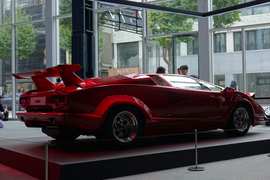
Furthermore, the Celica Sport has the potential to capture a segment of the market that the Supra cannot, namely buyers seeking a more affordable, more practical, yet still highly engaging sports coupe. While the Supra serves as a halo car, the Celica Sport is poised to be the volume performance model, bringing the thrill of Gaz