



The Central Nervous System Revolution: How Drako DriveOS is Reshaping Automotive Computing for the Masses
For over a decade, the automotive industry has been grappling with an escalating paradox: vehicles are becoming astonishingly complex and prohibitively expensive. The intricate web of electronic control units (ECUs) and specialized software that defines modern automobiles, while enabling advanced features, has ballooned manufacturing costs and introduced significant vulnerabilities. Yet, a bold vision is emerging from Silicon Valley, spearheaded by entrepreneurs who built their fortunes in the very silicon that now underpins our digital lives. Drako Motors, founded by Dean Drako and Shiv Sikand, is not just building a hypercar; they are pioneering a fundamental shift in how vehicles are designed and built, a revolution encapsulated in their proprietary Drako DriveOS.
This groundbreaking operating system, honed over ten years of relentless development and rigorously tested in their own 1,200-horsepower electric hypercar, the Drako GTE, promises to democratize advanced automotive technology. The core promise of Drako DriveOS is elegantly simple yet profoundly impactful: a centralized, high-performance compute platform that communicates directly with a vehicle’s sensors and actuators. This direct link drastically slashes latency, thereby unlocking unprecedented levels of performance, safety, and cybersecurity that were previously exclusive to the realm of ultra-luxury vehicles.
From Chip Design to Automotive Innovation: The Drako Genesis
Dean Drako and Shiv Sikand are not newcomers to complex engineering challenges. Their entrepreneurial journey began with IC Manage, a company that revolutionized design-data management for silicon chip manufacturers. The immense success of IC Manage provided the financial bedrock and, crucially, the deep technical expertise necessary to pursue their automotive passion project: Drako Motors. Their vision was to prove that the principles of efficient, centralized computing, proven in the semiconductor world, could be directly applied to the automotive sector to overcome its burgeoning complexities and escalating costs.
The initial pitch for Drako DriveOS resonated with a familiar, yet significantly amplified, narrative: a single, powerful computational core orchestrating every aspect of the vehicle. This concept echoes the “Heart of Joy” initiative seen in vehicles like the 2026 BMW iX3, which sought to consolidate control. However, Drako’s ambition took it a giant leap further, aiming for a unified brain capable of directly controlling all four wheels with zero latency.
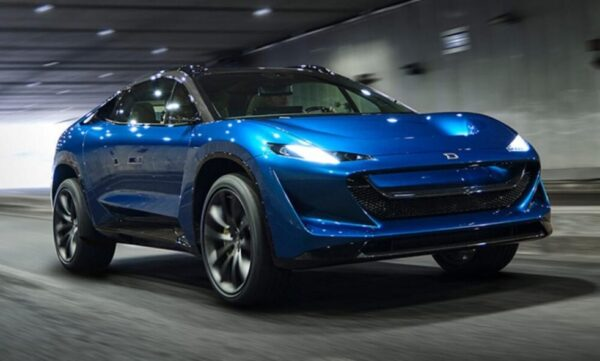
To truly showcase the potential of their operating system, Drako’s founders recognized the need for a demanding, high-performance platform. In 2014, the landscape of four-motor electric vehicles was nascent. Undeterred, they embarked on building their own proof-of-concept – the Drako GTE. This hypercar, a marvel of engineering, served as the ultimate testbed for Drako DriveOS, allowing for precise torque-vectoring control of each wheel, alongside the management of all safety, infotainment, and dynamic driving functions. It’s noteworthy that Drako Motors partnered with Pankl Racing Systems for the development of ultra-high-strength half-shafts for the GTE. This collaboration has proven prescient, as Pankl now supplies similar components to leading electric hypercar manufacturers, highlighting the GTE’s role in pushing the boundaries of EV technology.
The Drako GTE and Dragon: Showcasing the Future of Automotive Design
The Drako GTE sedan, while a hypercar, embodies a pragmatic approach to development. To accelerate the creation of fundamental components like glass, hinges, and instrumentation, the GTE chassis is based on the Fisker Karma, which has been extensively re-engineered and electrified. The powertrain boasts a formidable 1,200 horsepower, fed by a 90 kWh battery pack strategically integrated into the car’s tunnel and beneath a raised floor. Initially announced with a price tag of $1.25 million and a limited production run of 25 units, the first GTE is currently under construction, representing the culmination of a decade of innovation.
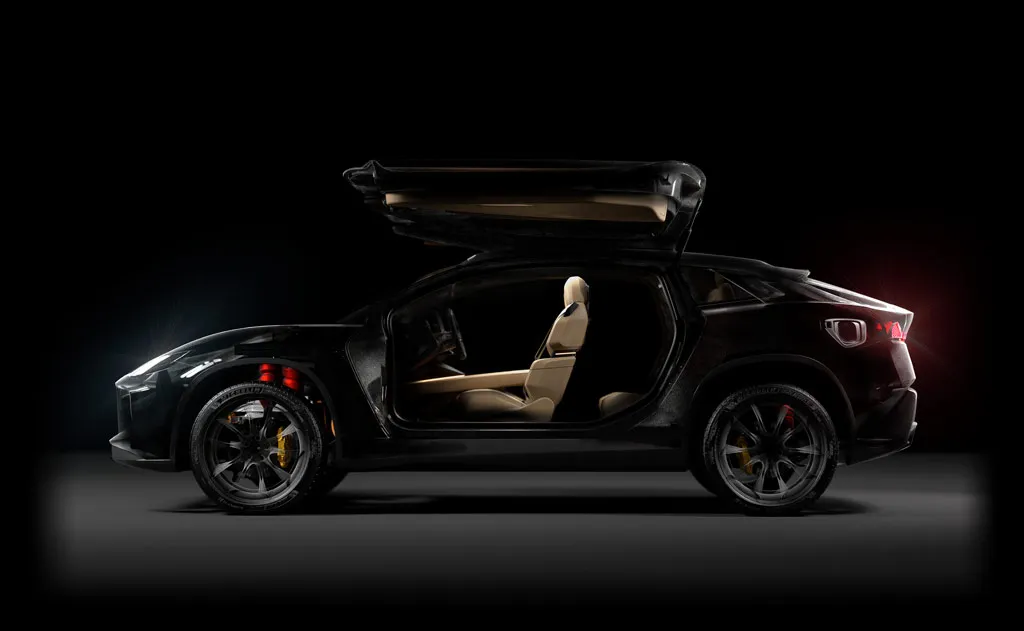
Complementing the GTE is the upcoming Drako Dragon SUV. This five-seat model promises an astonishing 2,000 horsepower, distinctive gullwing doors, and a more accessible price point of $300,000. However, the true significance of both vehicles lies not solely in their headline-grabbing performance figures, but in their function as tangible demonstrations of Drako DriveOS’s transformative capabilities.
The Alarming Rise of Automotive Software Costs
The financial realities of modern vehicle manufacturing are stark. In 1980, software represented a mere 10 percent of a vehicle’s total cost. Fast forward to the current decade, and that figure has surged to an alarming 30-40 percent. The relentless pursuit of advanced safety features, autonomous driving capabilities, and enhanced user experiences is projected to push software’s contribution to a staggering 50 percent by 2030. This escalating cost of software development, integration, and validation is a primary driver of the current affordability crisis in the automotive market. Manufacturers are increasingly burdened by the overhead associated with managing dozens, if not hundreds, of specialized electronic control units, each with its own unique operating system and communication protocols.
Drako DriveOS vs. Traditional Electronic Architectures: A Paradigm Shift
The automotive industry, for a multitude of historical and practical reasons, has been notably resistant to the widespread adoption of modern computing architectures. Unlike the consumer electronics and personal computing sectors, which have long embraced powerful, commodity processors and standardized operating systems, car manufacturers have largely relied on a decentralized model. This approach involves a vast array of bespoke ECUs, each dedicated to a specific function – from anti-lock braking systems (ABS) and airbag deployment to seat massage functions and even scent dispensers.
This distributed architecture is partly a consequence of the automotive ecosystem and the perceived limitations of general-purpose operating systems. Industry insiders and suppliers often point to the real-time processing demands required for safety-critical functions. Standard operating systems like Windows or Linux, while ubiquitous and powerful, are not inherently designed for the deterministic, ultra-low-latency execution demanded by vehicle safety systems. The fear of interruptions from less critical processes – such as a tire pressure monitoring alert – compromising the immediate response of the braking system, has led to a preference for dedicated, isolated controllers.
The consequence of this approach is a complex, intertwined network of hundreds of ECUs, each running its own miniature real-time operating system. This “spaghetti wiring” not only adds significant weight and complexity to vehicle assembly but also creates a multitude of “attack surfaces.” These are points where malicious actors can potentially infiltrate the vehicle’s communication networks, a concern highlighted by past incidents involving unauthorized access through radio systems or even lighting components.
The Drako DriveOS Alternative: Unifying Control with Uncompromised Safety
Drako DriveOS fundamentally challenges this traditional paradigm. The foundation of Drako DriveOS is built upon the widely adopted Linux operating system, a platform renowned for its robustness and versatility. However, Linux, in its standard form, lacks the deterministic, real-time capabilities essential for safety-critical automotive applications. This is where Drako’s innovative approach, developed in collaboration with Richard West at Boston University, becomes paramount.
Their solution lies in a novel kernel design and a sophisticated data pipe mechanism. Kernels, the core components of any operating system, act as intermediaries between the hardware and software applications, managing crucial system resources like memory and processes. Drako’s kernel functions as a sophisticated hypervisor, ensuring a secure and consistent environment for applications to interact with the vehicle’s hardware.
The critical innovation within Drako DriveOS is its proprietary “data pipe.” This unique mechanism creates a direct, secure channel between the safety-critical processor and the silicon responsible for receiving safety-critical data. By effectively “walling off” these critical areas, the system ensures that safety tasks remain prioritized and unhindered by non-essential operations. This architecture allows Drako DriveOS to leverage the power and familiarity of Linux while guaranteeing the real-time performance and determinism required for advanced safety systems. This is a significant leap forward, offering a more robust and efficient approach compared to fragmented, specialized ECUs.
Simplifying Communications, Amplifying Savings: A Bonus Advantage
Beyond its core processing capabilities, Drako DriveOS offers significant advantages in vehicle communication. While it can interface with existing automotive protocols like Ethernet, CAN, Flexray, and LIN, many of these have inherent limitations. These protocols often necessitate complex translation and conversion processes by the central processor, adding latency and slowing down data transmission rates. Shiv Sikand notes that the fastest Ethernet can respond in 514 microseconds, while USB, a protocol native to modern computing, can achieve speeds as low as 108 microseconds in current iterations.
Crucially, every modern Intel processor is equipped with native support for the Universal Serial Bus (USB) communication and control protocol. This inherent compatibility allows the central processor within a Drako DriveOS-equipped vehicle to send commands directly to sensors and actuators without the need for cumbersome translation. At the sensor and actuator level, only a simple, cost-effective pin connector is required to route these USB signals, eliminating the need for expensive custom silicon often required by other networks. This translates into substantial cost savings, estimated by Shiv Sikand to be between $4 and $10 per connection.
Furthermore, as autonomous driving capabilities become more prevalent, the sheer bandwidth demands will necessitate a shift to higher-speed protocols. USB 5, for instance, is projected to handle an astounding 80 gigabits per second, a stark contrast to the maximum 20 megabits per second of CAN XL (which requires prior data compression, further adding latency). Commodity cameras, which are increasingly vital for advanced driver-assistance systems (ADAS) and autonomous navigation, natively communicate over USB, making the integration seamless and cost-effective.
Enhanced Cybersecurity: A Unified Fortification
In an era where vehicle cybersecurity is paramount, Drako DriveOS presents a significantly more secure architecture. Traditional vehicle networks, with their myriad ECUs and complex interconnections, offer numerous potential entry points for cyberattacks. By consolidating control onto a single, powerful PC core running Drako DriveOS, the number of potential “attack surfaces” is dramatically reduced.
Moreover, USB, unlike traditional communication protocols, is intrinsically designed for device control. This allows the Drako DriveOS software to establish its own secure communication protocols, which are inherently more difficult for hackers to penetrate compared to industry-standard protocols like CAN or Ethernet. This enhanced security posture is not merely a feature; it’s a foundational element of the Drako DriveOS design, offering a robust defense against evolving cyber threats.
The Future of Mobility: Accessible Innovation
Shiv Sikand eloquently articulates the overarching mission of Drako Motors: “Bill Gates put a PC on everyone’s desk, and everyone’s still got one on their desk. We want to put another one in their car.” This analogy underscores the ambition to bring the power and efficiency of modern computing to the automotive realm, making advanced features accessible and affordable.
Drako Motors is not aiming to hoard its revolutionary software. The company envisions a licensing model where a nominal fee of a few hundred dollars per vehicle, applied across the tens of millions of cars produced annually, would represent a significant return on their substantial investment in Drako DriveOS. This economic model has the potential to fundamentally alter the cost structure of vehicle manufacturing, paving the way for a new generation of vehicles that are both technologically advanced and economically attainable.
Having personally experienced the tangible benefits of reduced latency in vehicles like the BMW iX3 – the improved responsiveness in cornering, acceleration, and braking – and knowing the passion and expertise of Dean Drako and Shiv Sikand, honed by their time spent driving some of the world’s most iconic automobiles, it’s clear that their silicon-driven approach to automotive performance is not just theoretical; it’s a tangible pathway to a more exciting, safer, and accessible automotive future.
The era of the overly complex and prohibitively expensive automobile is drawing to a close. As Drako DriveOS emerges from the hypercar development stage and moves towards broader implementation, the industry is poised for a profound transformation. If you’re involved in automotive manufacturing, technology development, or simply a passionate driver eager for the next generation of vehicles, understanding the implications of centralized, high-performance computing like Drako DriveOS is no longer optional – it’s essential for navigating the future of mobility. To explore how this revolutionary operating system can be integrated into your next vehicle project or to learn more about the specific technical advantages it offers for automotive software development, we invite you to connect with the Drako Motors team and discover the central nervous system revolution.