Italdesign’s New Chapter: AI Integration Ushers in a New Era for Automotive Innovation
For decades, the name Italdesign has resonated within the automotive world, synonymous with groundbreaking aesthetics and engineering prowess. Established in 1968 by the visionary Giorgetto Giugiaro and Aldo Mantovani, the Italian design house has been instrumental in shaping the silhouette of countless iconic vehicles. Now, in a pivotal shift signaling the industry’s accelerating embrace of advanced technologies, the Volkswagen Group has divested its majority stake in Italdesign, passing the reins to UST, a prominent U.S.-based technology and Artificial Intelligence (AI) firm. This landmark transaction, announced in late 2025, marks not an end, but a transformative new beginning for automotive design and development.
The Volkswagen Group, which acquired a controlling interest in Italdesign through its Audi subsidiary back in 2010, will retain a minority stake. This continued involvement, specifically through its performance marque Lamborghini, underscores the enduring value and strategic importance of Italdesign’s capabilities. Audi, too, will maintain a close relationship, transitioning from majority ownership to a critical role as a strategic partner and significant client. This nuanced arrangement ensures a seamless integration of UST’s AI-driven methodologies with Italdesign’s rich heritage and proven design acumen, promising an exciting trajectory for future automotive creations.
The Enduring Legacy of Italdesign: More Than Just a Pretty Face
While the allure of a stunning car often lies in its exterior design, Italdesign’s influence runs far deeper than just aesthetics. The firm’s portfolio reads like a who’s who of automotive legends, each bearing the indelible mark of Italdesign’s creative genius. Beyond the headline-grabbing models, their contributions have quietly shaped the evolution of personal transportation.
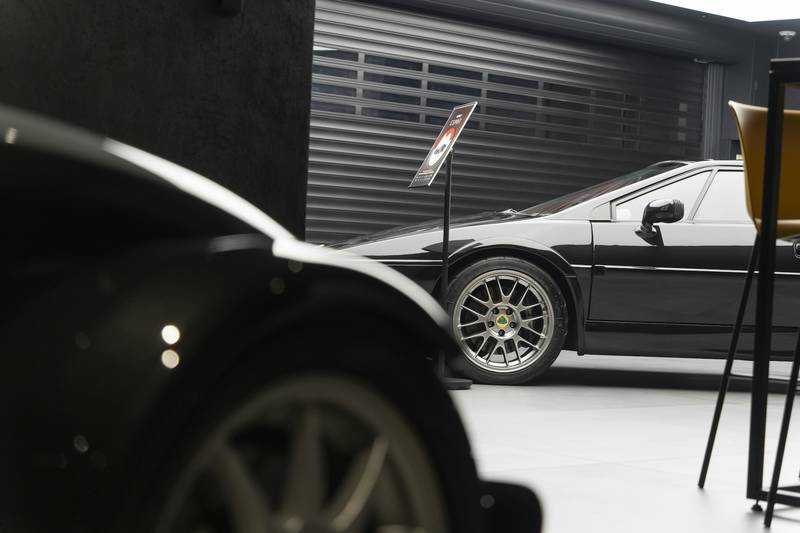
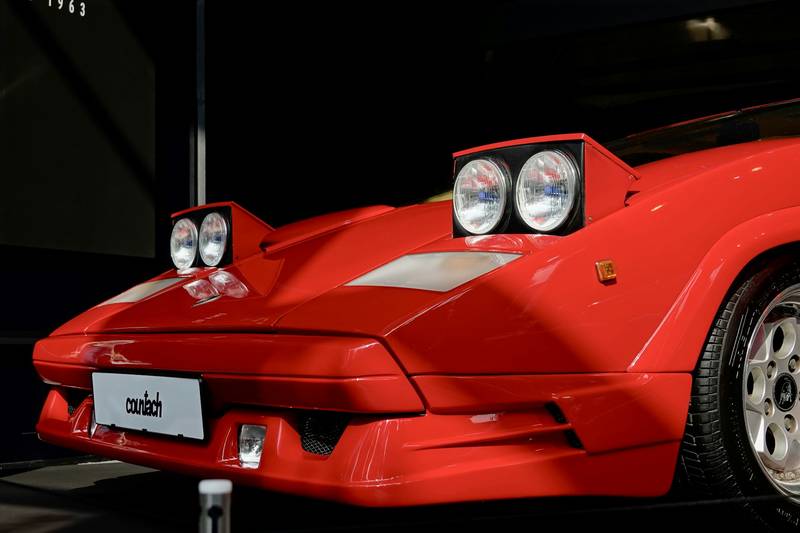
Consider the visceral thrill of the BMW M1, a mid-engine sports car that remains a benchmark for performance and design. Or the enduring cult status of the DMC DeLorean, immortalized by its role in cinema, its angularity a testament to an audacious design philosophy. The sleek lines of the Lotus Esprit, a symbol of British sports car elegance, also owe much to Italdesign’s touch. And for a broader audience, the foundational designs of early Volkswagen Golf, Jetta, and Passat models established the archetypes for compact and mid-size sedans that continue to dominate global markets. These are not mere historical footnotes; they are tangible proof of Italdesign’s ability to conceptualize and realize vehicles that capture the zeitgeist and endure for generations. The firm’s ability to consistently deliver groundbreaking car design concepts and automotive engineering solutions has cemented its reputation as a true powerhouse.
The AI Imperative: Why UST and Italdesign Are a Synergistic Match
The strategic acquisition of Italdesign by UST is a clear indicator of the automotive industry’s trajectory. The integration of Artificial Intelligence is no longer a futuristic concept; it is a present-day necessity for any entity aiming to lead in innovation. UST, with its deep-seated expertise in AI, machine learning, and advanced software development, is uniquely positioned to propel Italdesign into this new digital frontier.
According to UST’s official announcement, the company explicitly believes that its cutting-edge AI capabilities will seamlessly complement Italdesign’s unparalleled proficiency in automotive and product design. This synergy is expected to unlock unprecedented levels of efficiency and creativity in the vehicle development process. The vision articulated by Antonio Casu, CEO of Italdesign, is particularly compelling: the company aspires to become the first to develop all requisite hardware and software for a vehicle entirely in-house. This ambitious goal signifies a paradigm shift, moving away from fragmented development cycles to a holistic, integrated approach. Imagine a future where design, engineering, simulation, and even software integration are conceived and executed under one roof, powered by sophisticated AI algorithms. This level of in-house vehicle development can drastically reduce lead times, enhance collaboration, and foster a more cohesive and optimized final product.
Leveraging AI for Enhanced Automotive Design and Engineering
The implications of this fusion for the automotive industry are profound, extending across numerous facets of vehicle creation and refinement. For automotive design firms, AI offers powerful tools for concept generation and exploration. Generative design algorithms, for instance, can explore millions of design permutations based on predefined parameters – from aerodynamics and structural integrity to aesthetic preferences. This allows designers to discover novel forms and solutions that might be beyond human intuition alone. Furthermore, AI can assist in virtual prototyping and digital twin technology, allowing for incredibly detailed simulations of a vehicle’s performance under various conditions long before any physical components are manufactured. This significantly reduces the cost and time associated with traditional physical prototyping, while simultaneously improving the accuracy and depth of analysis.
For automotive engineering companies, AI can optimize complex systems. From powertrain efficiency and chassis dynamics to advanced driver-assistance systems (ADAS) and autonomous driving functionalities, AI algorithms can analyze vast datasets to identify optimal configurations and predict potential failures. This leads to more reliable, efficient, and safer vehicles. The drive towards sustainable automotive solutions and electric vehicle (EV) development will also be significantly bolstered. AI can optimize battery management systems, predict charging patterns, and enhance the efficiency of electric powertrains, crucial for extending range and reducing energy consumption.
The Future of Vehicle Development: Speed, Efficiency, and Personalization
The aspiration to develop all hardware and software in-house, powered by AI, holds the key to unprecedented agility and customization in automotive development. In an era where consumer demand for personalized experiences is soaring, this integrated approach is paramount. AI can analyze consumer preferences and behavioral data to inform design decisions, leading to vehicles that are not just functional but deeply resonant with individual needs and desires. This could revolutionize the custom car build process, making bespoke vehicles more accessible and the entire experience more streamlined.
Furthermore, the acceleration of the development cycle through AI-driven processes will enable manufacturers to respond more rapidly to market shifts and technological advancements. This enhanced agility is critical in a rapidly evolving automotive landscape, particularly with the ongoing advancements in autonomous driving technology and the increasing demand for connected car features. The ability to quickly iterate on designs and integrate new functionalities will be a significant competitive advantage. For businesses seeking automotive design services or exploring car design consultancy, the integration of AI by firms like Italdesign will undoubtedly redefine expectations for innovation and speed.
Navigating the Evolving Landscape: The Role of Strategic Partnerships
The transition of Italdesign into majority ownership by UST is not an isolated event but part of a broader industry trend. As the complexity of automotive technology escalates, strategic partnerships are becoming increasingly vital for success. Companies are realizing that no single entity can possess all the specialized knowledge and capabilities required to navigate the future of mobility.
Audi and Lamborghini’s continued involvement as strategic partners highlights the value of maintaining relationships with established players while embracing new technological paradigms. This ensures continuity and leverages existing expertise, while the introduction of UST brings the disruptive innovation necessary to stay ahead of the curve. For automotive suppliers and OEMs, understanding these evolving partnership models is crucial for identifying collaboration opportunities and adapting their own business strategies. The market for automotive AI solutions is poised for significant growth, and firms that can effectively integrate these technologies into their design and manufacturing processes will undoubtedly lead the way.
The Californian Connection: Silicon Valley’s Influence on Global Automotive Design
The fact that UST is a California-based firm places the heart of the world’s leading technology hub at the forefront of this automotive design revolution. Silicon Valley has long been synonymous with innovation in AI, software, and digital transformation. Its influence is now extending directly into the physical realm of automotive design, bridging the gap between the digital and the tangible. This infusion of Silicon Valley’s agile, data-driven approach into the traditionally more hardware-centric automotive world promises a potent combination. The rapid iteration cycles and user-centric design principles that have defined the tech industry are now being applied to the creation of vehicles, leading to more intuitive user interfaces, enhanced connectivity, and a more responsive driving experience.
For those seeking automotive innovation consulting or exploring future automotive trends, this transatlantic convergence of design and technology is a critical development to monitor. It suggests a future where vehicles are not just modes of transportation but sophisticated, intelligent extensions of our digital lives. The implications for automotive aftermarket services and the development of new car models are immense, pointing towards a future of highly integrated, personalized, and technologically advanced vehicles.
Looking Ahead: The Bold Vision of Integrated Automotive Development
The acquisition of Italdesign by UST represents a bold step into the future of automotive design and development. It is a testament to the transformative power of Artificial Intelligence and the industry’s willingness to embrace disruptive change. As the automotive landscape continues its rapid evolution, driven by electrification, autonomy, and connectivity, the integrated approach championed by Italdesign under UST’s stewardship will likely set a new standard.
For designers, engineers, and consumers alike, this fusion promises a future where vehicles are conceived and built with unparalleled speed, precision, and a profound understanding of individual needs. The iconic legacy of Italdesign, now infused with the cutting-edge capabilities of UST, is poised to redefine what is possible in the world of automobiles. The pursuit of the ultimate driving experience is about to enter a thrilling new phase, driven by the intelligent integration of human creativity and artificial intelligence.
This significant strategic shift invites a renewed conversation about the very essence of automotive creation. For manufacturers seeking to lead in this dynamic market, and for consumers eager for the next generation of automotive innovation, the path forward is clearer than ever. Embracing these advancements is not just an option; it’s the imperative for shaping the future of mobility.